Removal, access and disposal
Extra layers, steep slopes, limited access and the distance materials must travel all affect labor and handling.
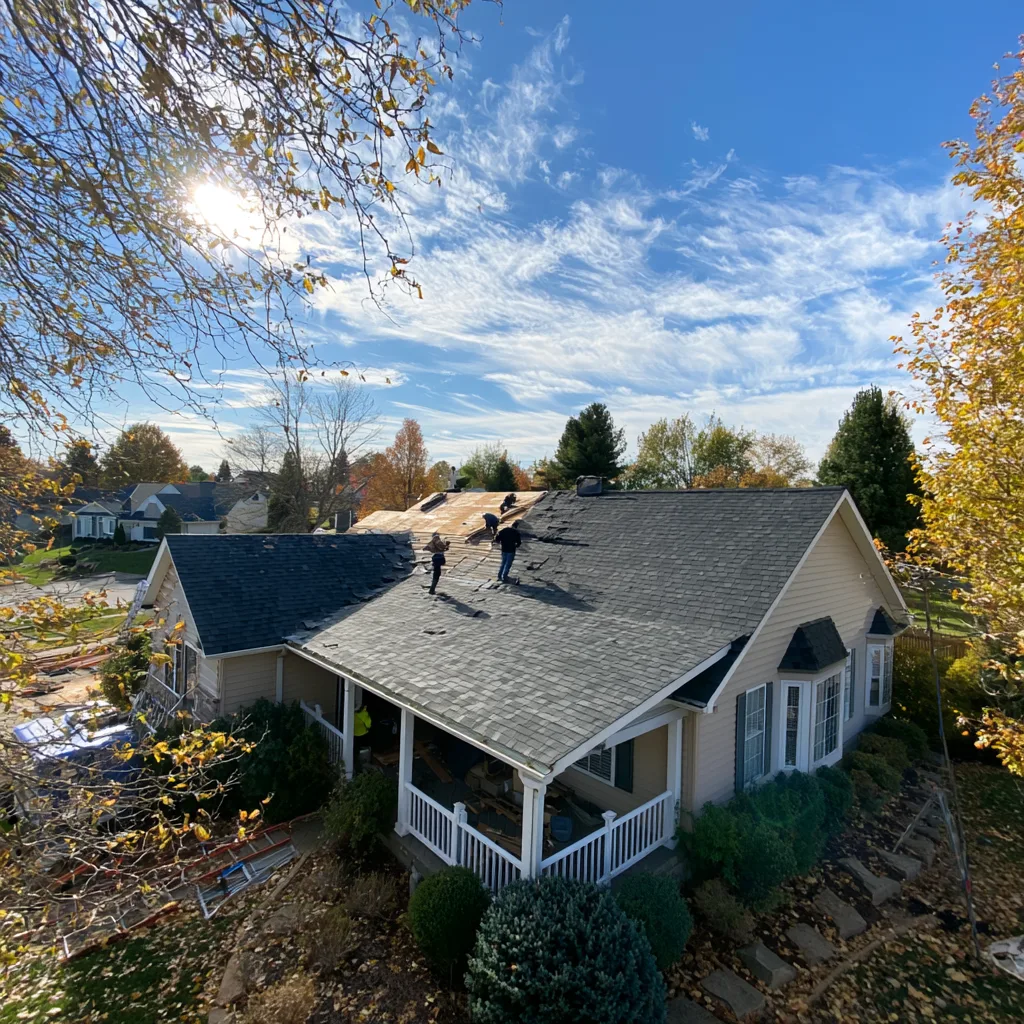
A new roof should address the whole assembly. Request a free inspection and plan the material, details and budget for your Gentry home.
New shingles are the visible finish. Beneath them, the deck provides a solid base and the underlayment adds a secondary water barrier. At the edges, walls and roof openings, flashing connects those layers so runoff stays outside.
Replacement becomes worth discussing when deterioration is spread across the roof, repairs no longer connect reliably to the surrounding material, or repeated problems point to a wider assembly issue. The roof's age helps frame that discussion, but age alone does not tell you what has failed.
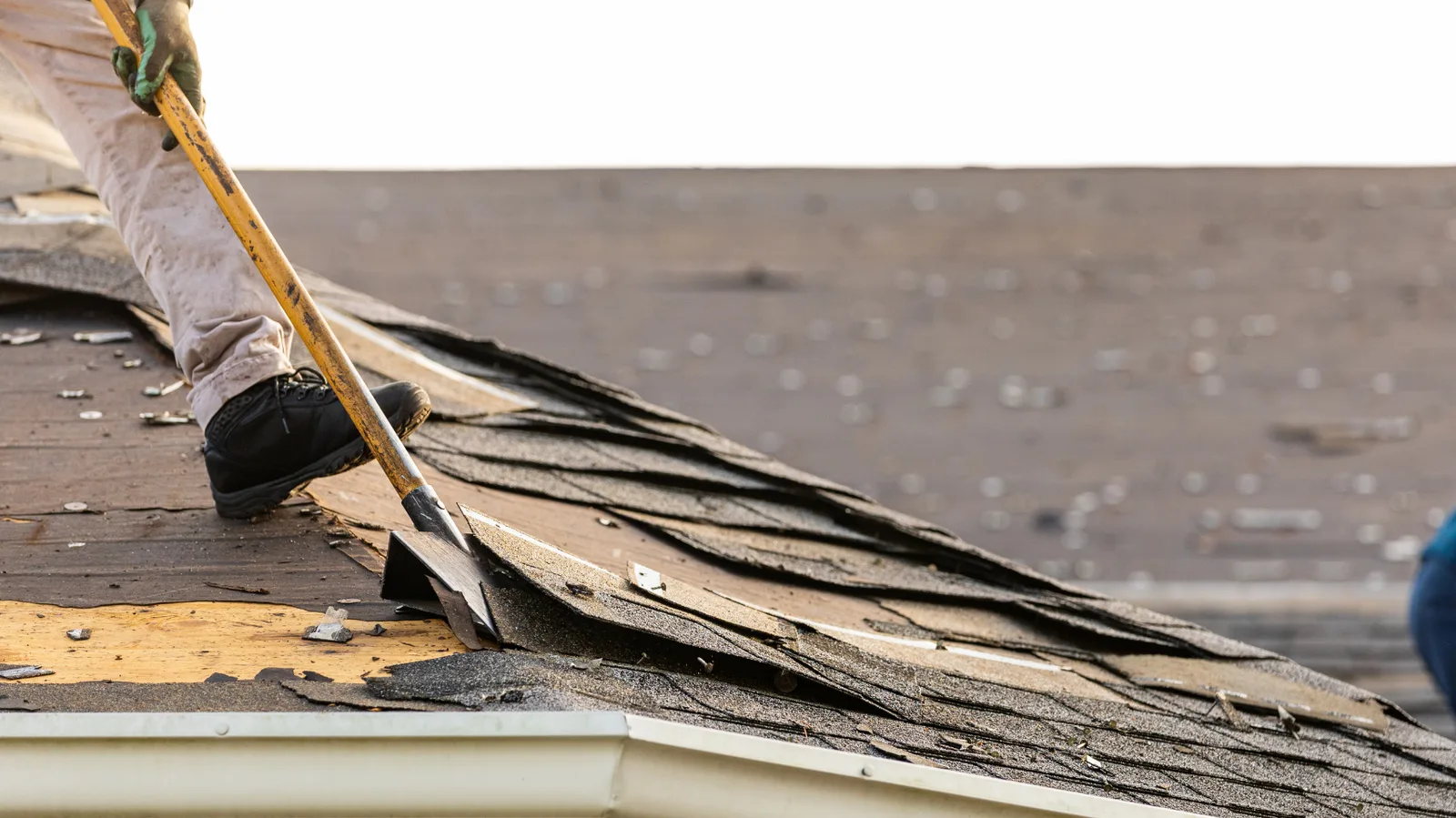
Old roofing is removed according to the agreed scope. This reveals the decking and details that were hidden during the initial inspection.
Unsound decking is addressed before underlayment and flashing go on. Openings and edges need sound connections, not simply a new surface over the old defect.
The selected covering, starter and ridge details are installed with the ventilation plan. Cleanup and the agreed finishing work complete the scope. Timing depends on the roof, conditions and contractor schedule.
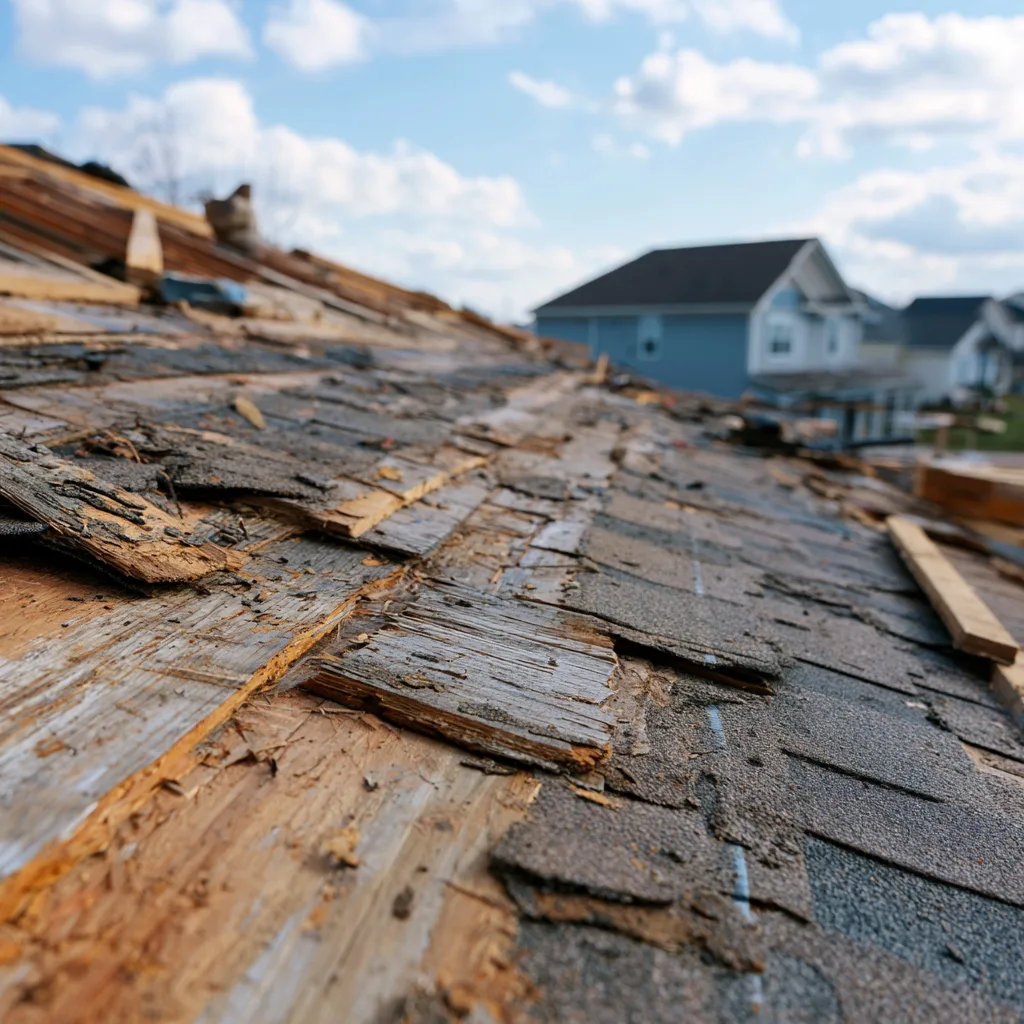
Decking is the surface the new roof fastens to. A roof can hide a soft patch beside an old leak or deteriorated boards under several layers. Those conditions are not always visible before tear-off.
The replacement scope needs a clear way to handle this: what decking work is included, how additional quantities are priced and how a change is approved. That keeps an unavoidable repair from being confused with an optional upgrade.
For broad context, GAF reports a 2025 US average roof replacement cost of $17,631 from the Verisk US Roof Report. That is not a Gentry quote or a price for a roof of a specified size. The roof cost guide explains how to use that context without mistaking it for your budget.
Extra layers, steep slopes, limited access and the distance materials must travel all affect labor and handling.
Flashing, pipe boots, valleys, ventilation and any necessary decking work belong beside the covering in the scope.
Applicable permits and the exact manufacturer or contractor terms matter. The warranty guide separates material protection from installation coverage.
An overlay leaves the old surface and concealed conditions in place. Existing layers, the deck, product requirements and applicable code determine whether it is allowed and sensible. Tear-off gives access to inspect the base; it should be considered as a distinct scope, not just a disposal charge.
Roofing creates noise, vibration, material handling and activity around the house. Occupancy and access need to be discussed for the actual project. Work hours and duration come from the contractor and conditions, not a standard promise.
A roof reaching the end of its service life is different from covered storm damage. Your policy and the insurer’s decision control payment. Read the roof claim guide for the deductible and payment distinctions.
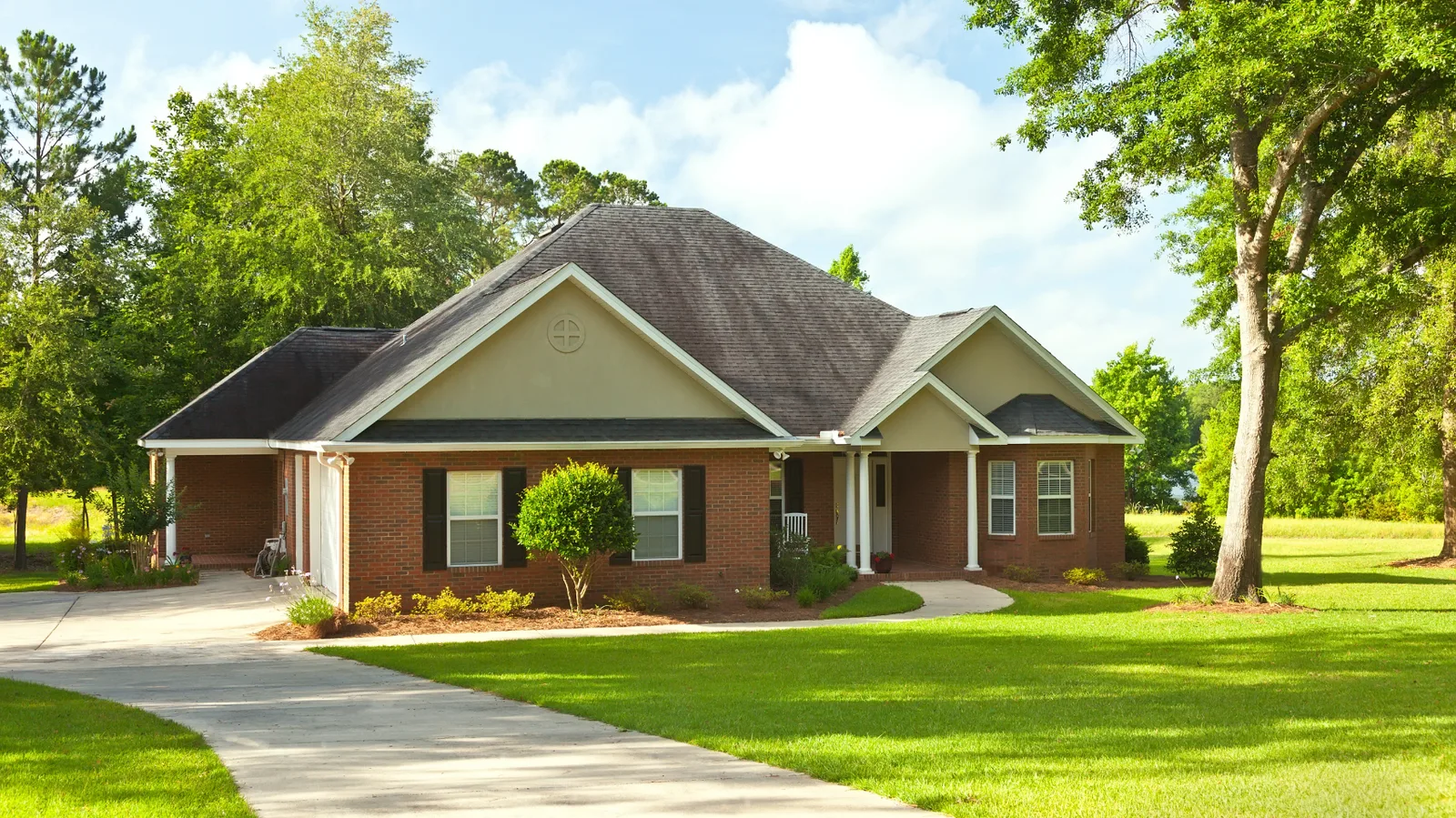
Share the property location and what has prompted replacement. A free inspection can help put the roof condition and material choices in context.