Pipe boots
The flexible collar around a vent pipe can split or separate. The repair must shed water onto the roofing below and tie into the surrounding shingles, rather than leave an exposed bead as the only defense.
A stain or missing shingle deserves a closer look. Request a free inspection for roof repair in Gentry.
A brown ring on the ceiling tells you where water became visible. It does not prove that the opening is directly above it. Water can follow underlayment, decking or framing before it drops into the room.
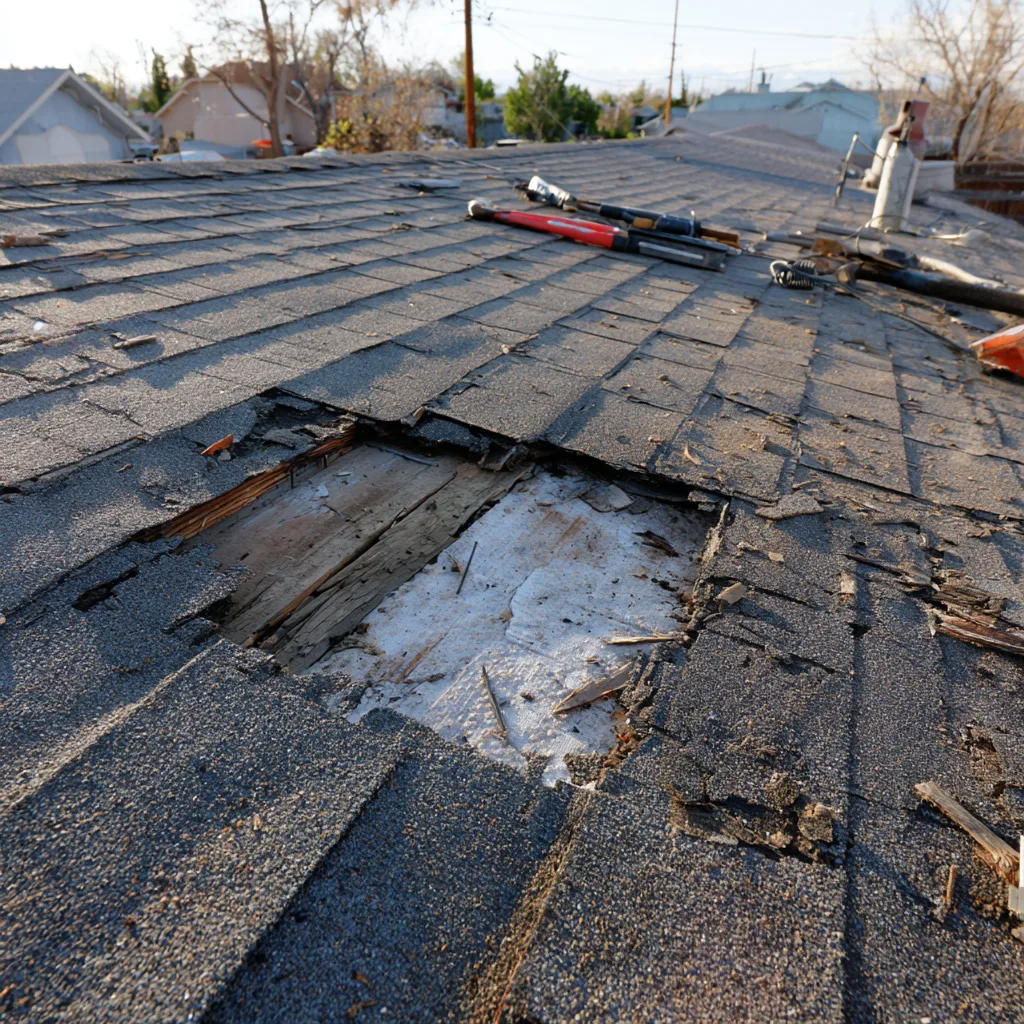
The repair starts with the water-entry detail and the material around it. A split pipe boot, lifted flashing and broken shingles call for different work. Covering the visible stain or putting sealant on the nearest joint does not establish that the leak is fixed.
Protect people first when water is entering the building.
The flexible collar around a vent pipe can split or separate. The repair must shed water onto the roofing below and tie into the surrounding shingles, rather than leave an exposed bead as the only defense.
Water must pass from the wall onto the roof through overlapping flashing. Gaps, poor overlaps or a failed termination can require opening adjacent roofing to rebuild the connection.
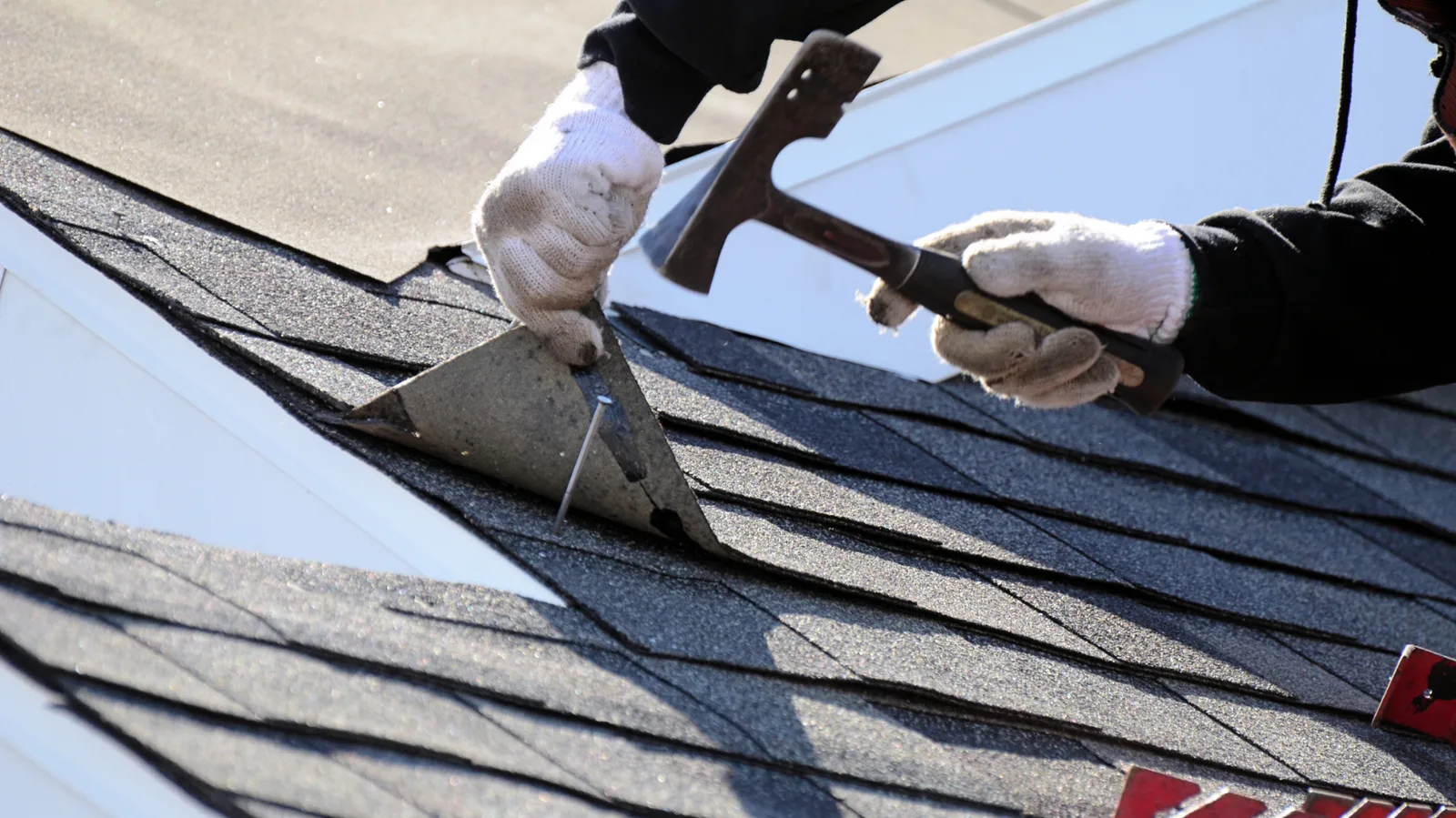
Replacing torn or missing shingles means fastening into a sound base and preserving the adjacent tabs. Matching size and exposure matters as well as color.
A repair needs room to connect to the roof. If surrounding shingles crack when lifted, the work can spread beyond the original damaged spot. If the base is wet or deteriorated, replacing the top layer leaves that problem in place.
That is why a recurring patch deserves a wider look. Where the roof can no longer support a sound connection, replacement planning may be more useful than continuing to repair one spot at a time.

A repair has to do more than hide the damaged spot. The sequence follows the failed connection and the layers that must stay or be replaced.
The roofer lifts or removes enough surrounding material to reach the failed boot, flashing or shingle connection. The opening must allow proper overlap and fastening; prying brittle adjoining shingles can extend the area that needs replacement.
Exposed decking and nearby layers are checked for moisture and deterioration. Wet or unsound material can change the agreed work and cost. A new covering cannot make a soft fastening base sound, and concealed damage may require a larger opening.
Replacement layers follow the selected system and shed water onto the layers below. Flashing, fasteners and shingle exposure need a sound tie-in to the retained roof. Sealant belongs only where the specified detail calls for it.
The repaired area is checked for secure attachment, completed overlaps and clear drainage. Remaining moisture or interior damage may need separate drying or repair. If water returns, its entry path needs reassessment rather than assuming the visible patch explains it.
The repair price reflects the failed detail, access and affected layers. Concealed damage can widen the work beyond the visible opening.
Some roofing systems use compatible sealants as part of a specified detail. A smear over a failed overlap or decayed boot is a different matter. The underlying connection and the condition of the material determine whether the repair will hold.
Rain direction and intensity can expose a gap that stays dry in other weather. A dry week does not prove a repair, and condensation or plumbing can also create indoor moisture. The source needs to be identified before the roof work is chosen.

Tell us where you see water, whether it is coming in now and the property location. Request a free roof inspection without climbing onto the roof.